


The Tuesday I Couldn’t Finish My Own Sentence
There’s a moment that stays with you.
Not a dramatic one. Not a medical emergency.
Just a quiet, chilling realization that your mind is not working the way it used to.
For me it happened on an ordinary Tuesday evening.
I was telling my husband about something I’d read in the newspaper that morning. Halfway through the sentence, the word I needed simply… vanished.
It wasn’t on the tip of my tongue.
It wasn’t hiding somewhere I could reach with a little effort.
It was gone.
I stood there in my own kitchen, mouth open, eyes searching the counter as if the word might be sitting next to the sugar bowl.
He filled it in for me. “Infrastructure?” he guessed.
And yes. That was it. A perfectly ordinary word.
But the fact that he had to supply a word that I — a retired English teacher — had used comfortably for four decades?
That was the moment I understood this was about more than “senior moments.”
I didn’t want to panic.
I didn’t want to sit up at 2 a.m. typing symptoms into a search bar and spiralling into worst‑case scenarios. I’ve watched friends do that. It never made anyone feel better.
But I couldn’t keep pretending nothing was happening either.
Because it wasn’t just words.
It was a slow, creeping change in how my mind worked from the moment I woke up to the moment I went to bed.
It wasn’t that I’d forgotten the word. It was that the machinery I used to reach for words had gotten slower — and I could feel it happening in real time.
I spent that whole night lying awake doing what I suspect you might be doing right now.
Taking inventory.
Counting up all the small things I’d been quietly filing away as nothing.
And once I started counting, the list was longer than I wanted it to be.
When Your Mind Starts to Feel Like It’s Running on Half Power
Let me say the part nobody says out loud.
Nothing about this is sudden. That’s exactly what makes it so unsettling.
It’s not like breaking a bone or catching a cold. There’s no date on the calendar you can point to.
You don’t wake up one morning and think, “My brain is different today.”
Instead it creeps in. Quietly. Gradually. Over months and years.
Until one day you realize that things which once came effortlessly now take conscious, visible effort.
And you’re the only one who knows how much effort. Because from the outside, you look exactly the same.
If you’re over 55 and you’re still reading, I suspect you know precisely what I mean.
See how many of these you recognize.
None of these, taken alone, is a crisis.
Every single one is something a 30‑year‑old does too. That’s exactly why they’re so easy to dismiss.
But when they start adding up?
When they stop being occasional slips and start being a pattern?
Something changes in how you see yourself.
You begin to doubt your own reliability.
You pull back a little in conversations, because you’re afraid you’ll lose your place mid‑sentence in front of people.
You stop volunteering to drive to unfamiliar places.
You let your spouse handle the phone calls.
You start writing everything down — not as a system, but as a defense.
It doesn’t only affect your mind. It affects your confidence. Your independence. Your willingness to say yes to things.
And here’s the part I found hardest.
You grieve it privately.
You don’t bring it up at dinner. You don’t mention it to your children, because you don’t want them looking at you differently — or worse, starting to manage you.
So you carry it by yourself.
And the carrying is its own kind of exhausting.
I Thought It Was Just Me. It Wasn’t.
Once I finally started talking about it — carefully, with people I trusted — the floodgates opened.
I have now had this conversation with dozens of people my age.
The stories are almost eerily similar.
A retired family court judge told me she quietly stopped hosting the dinner parties she’d hosted for thirty years. She could no longer keep up with a table of eight the way she used to.
She never told anyone why. She just said she was “slowing down.”
A former civil engineer told me he now avoids phone calls whenever he can and sends emails instead. On the phone he stumbles over words, and it embarrasses him.
This is a man who once presented to city councils for a living.
A grandmother told me she nods and smiles when her grandchildren tell her about their week — and privately admits she’s only holding on to about half of it.
She pretends to remember. Because she doesn’t want them to notice.
The emotional weight of this is something almost nobody talks about openly.
But it is real. And it is heavy.
And if you have felt it, I want you to know with certainty: you are not imagining it, and you are not alone in it.
We don’t hide it because we’re ashamed of forgetting. We hide it because we’re afraid of what other people will decide about us once they notice.
Why I Refused to Accept “That’s Just How It Is”
Here’s what frustrated me most in that first year.
Whenever I raised these concerns with the people around me, the response was almost always identical.
“Oh, that happens to everyone.”
Or the classic: “You’re just getting older. Don’t worry about it.”
I understand the impulse. People say it kindly. They’re trying to reassure you.
But being told not to worry about something you can clearly feel changing isn’t reassuring.
It’s dismissive. And it leaves you with nowhere to go.
Because I did worry about it.
Not because I was catastrophizing. I’m not built that way.
But because I could feel the difference in a way nobody else could.
My mind used to be my sharpest tool.
I graded four sets of essays a week. I managed a classroom of thirty teenagers and remembered every one of their names by the second week of September. I planned lessons, ran a department, and held genuinely complicated conversations about literature without ever once losing my footing.
And now, at 68, I was struggling to finish my own sentences in my own kitchen.
I wasn’t ready to file that under “inevitable.”
So I did what a retired English teacher does.
I researched.
What I Actually Learned About the Aging Brain
Let me be very clear before I go any further.
I am not a doctor. Nothing in this article is medical advice.
If you have a genuine concern about your memory, please speak to a physician. I did, and I’d encourage anyone to.
What follows is simply what I found in plain‑language reading from public health sources — and what it changed in how I thought about my own situation.
The first useful thing I learned is that the National Institute on Aging draws a distinction between normal age‑related changes in thinking and the kind of changes that warrant medical evaluation.
Both are real. They are not the same thing.
Occasionally forgetting a name and remembering it later sits in a very different category than getting lost on a street you’ve lived on for decades.
That distinction alone brought my blood pressure down considerably.
The second thing I learned is that cognitive health in later life is not one single thing.
It’s influenced by a whole cluster of ordinary, unglamorous factors. Sleep quality. Physical activity. Cardiovascular health. Blood flow. Blood sugar. Hearing. Social engagement. Stress load. Mental stimulation.
There is no single lever.
There is a whole panel of small levers.
The third thing genuinely surprised me.
A great deal of what we experience as “memory trouble” may actually be attention trouble.
You cannot recall what you never properly encoded in the first place.
If your attention is fragmented, tired, or divided, information doesn’t get filed properly. Later, there’s simply nothing to retrieve.
It feels like a memory failure.
Functionally, much of it is an attention and mental‑energy failure.
That reframe changed everything for me.
I stopped thinking “my memory is going.”
I started thinking “my mental energy and focus are running low, and everything downstream of that is suffering.”
It felt less like a verdict. More like something I could actually work with.
So I got practical.
I started walking forty minutes every morning, rain or shine. I moved my reading to the morning instead of after dinner, when I was already spent. I got my hearing tested, which I’d been putting off for three years. I cut back on the evening glass of wine I’d convinced myself was helping me sleep. I did crosswords — but the harder ones.
All of it helped. Incrementally.
But I also kept coming across references to natural formulas designed specifically to support mental clarity and everyday cognitive function.
A category I’d always mentally filed under “probably nonsense” without ever actually examining it.
The Friend Who Handed Me a Little White Bottle
That’s when Patricia came into it.
Patricia is 72 and sharper than most 50‑year‑olds I know. She still does the Sunday crossword in pen, which I find mildly infuriating.
We were having coffee. I was complaining about my afternoon fog.
She reached into her purse and put a small white bottle on the table between us.
She called it her “brain reset button.”
I laughed. Out loud, I’m afraid.
A spray? For your brain?
It sounded like something you’d find at a checkout counter next to the breath mints.
But Patricia wasn’t joking. And Patricia is not a woman who falls for things.
She told me it was called Brain Power, made by a company called Sprayology, and that she’d been using it for nearly five months.
She was careful with how she described it, which I appreciated.
She said it was not a miracle.
She said she still walked every morning, still did her puzzles, still took her blood pressure medication.
But she said the spray made a noticeable, consistent difference in how clear and focused she felt across the day.
“I don’t lose my train of thought the way I did,” she told me. “I can get through a whole article without floating off. And I actually remember conversations I had two days ago instead of nodding along and hoping.”
I was still skeptical.
But I was also, by that point, genuinely tired of being frustrated with my own mind.
So I told her I’d look into it properly.
And I did — in the thorough, slightly obsessive way that used to drive my students crazy.
What Brain Power Is — And What It Isn’t
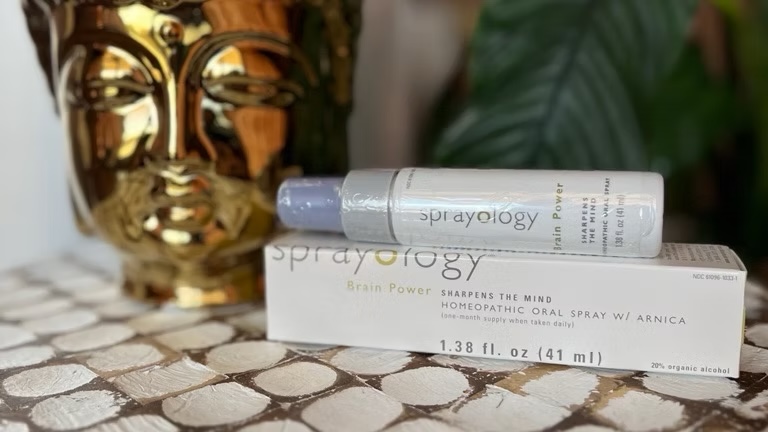
Brain Power by Sprayology — a 1.38 fl. oz. (41 ml) homeopathic oral spray. One bottle is a one‑month supply when used as directed.
Brain Power is a homeopathic oral spray made by Sprayology.
Sprayology is a U.S. company that has specialized in sublingual — under‑the‑tongue — natural wellness formulas since the year 2000.
Unlike capsules or tablets that have to be swallowed and processed through your digestive system, the spray is designed to be absorbed through the tissue under your tongue.
The idea is refreshingly simple.
Deliver targeted natural support for mental clarity, focus, and everyday sharpness — in a format that’s fast, discreet, and easy to actually keep up with.
Which, if you’ve ever abandoned a supplement regimen after eleven days, you’ll recognize as more important than it sounds.
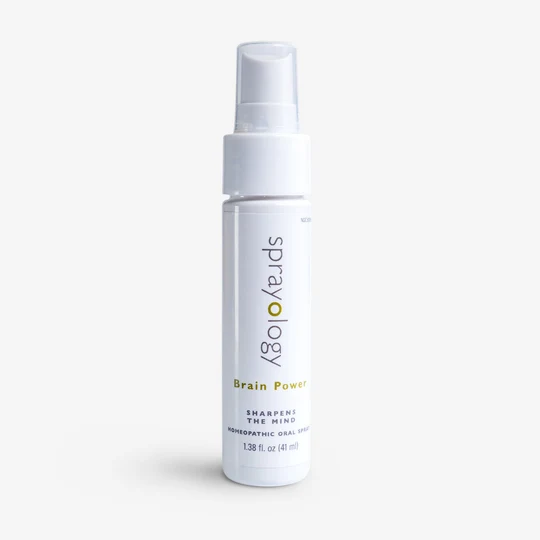
- Product Brain Power — “Sharpens the Mind”
- Format Homeopathic oral spray, sublingual
- Directions 2 sprays under the tongue, 3× daily
- Size 1.38 fl. oz. (41 ml) — 1‑month supply
- Actives Arnica 4X · Baryta carb 30C · Calc phos 30C · Ginkgo 6X · Hamamelis 4X · Phosphoricum ac 30C
- Inactives Non‑GMO glycerin, organic alcohol 20% v/v, purified water
- NDC 61096‑1033‑1
- Made in United States · ships from Maryland
- Guarantee 3 weeks, when purchased at Sprayology.com
What the formula is designed to support:
- Short‑term memory support — helping you hold on to details, names, and recent conversations more reliably.
- Mental clarity — easing that persistent foggy feeling that makes thinking feel like work.
- Concentration and focus — making it easier to stay engaged while reading, listening, or doing anything that asks for sustained attention.
- Decision‑making confidence — supporting the mental agility to think a choice through without endlessly second‑guessing yourself.
- Daily cognitive energy — helping your mind feel awake and responsive rather than sluggish and delayed.
And now the part most advertisements skip.
What it isn’t.
It is not a drug.
It is not a prescription.
It is not a treatment for any disease, and it makes no claim to be one.
It is not evaluated by the FDA for effectiveness — and neither is any homeopathic product.
It will not reverse anything.
It is a homeopathic wellness product intended for everyday use by adults who want a natural option for supporting their mental function as they age, or during stretches of heavy mental fatigue and overwork.
I want to be blunt about that.
If you’re looking for a product that promises to cure something, this isn’t it.
And you should be suspicious of anything that says otherwise.
See Brain Power on the Official Site →Opens sprayology.com · Official manufacturer store · Ships from Gaithersburg, Maryland
The CompanyThe Woman Behind the Bottle: Ellie Whalen’s Story
This was the part of my research that shifted me from “skeptical” to “willing to try it.”
I have a rule about wellness products, and it has served me well.
Find out who made it, and why.
If the answer is a holding company and a marketing budget, I walk away.
If the answer is a person with a story that predates the business, I keep reading.

Ellie didn’t set out to build a wellness company.
She spent roughly 15 years in a demanding corporate career — marketing, sales, operations, management, with well‑known consumer and luxury brands.
And she paid for it the way a lot of us do.
She developed asthma. Then chemical sensitivities. Then multiple allergies.
Prescription after prescription. None of it resolved.
The turning point was a severe allergic reaction that put her in the hospital.
That was the moment she stopped looking for the next prescription and started looking for a different approach entirely.
She turned to homeopathy.
What came next is the part I find genuinely credible.
She didn’t simply buy remedies off a shelf.
She spent months researching ingredients — and, more importantly, absorption. How a natural formula could actually get into the body efficiently, rather than being lost somewhere in the digestive process.
She experimented with formulas on herself.
Over time, her symptoms improved and her energy came back.
She founded Sprayology in 2000, in Maryland, to make what had worked for her available to other people.
In a delivery format that ordinary, busy, forgetful humans would actually use.
Not a cabinet full of droppers and tinctures. A spray you can keep in a coat pocket.
Twenty‑five years later, the company has served over 100,000 customers, produces a line of wellness sprays that includes both homeopathic and vitamin formulas, and is carried in spas, resorts, and wellness boutiques across the United States.
Every product is manufactured in the U.S. and ships from Gaithersburg, Maryland.
That’s not a marketing origin story written backwards from a product.
That’s a person who got sick, couldn’t find an answer, went and found one, and then built a business around it.
I’ve been buying things for fifty years. I know the difference.
In Her Own WordsEllie Explains the Formula, in Her Own Words
I’ll be honest.
I trust a person on camera far more than I trust a paragraph of copy.
Ellie has filmed short explanations of her formulas, and I’d encourage you to watch this one before you decide anything.
It takes seconds. And you’ll get a much better sense of who is behind this than I can give you in writing.
Ellie Whalen, founder of Sprayology, on the thinking behind the formulation. Video courtesy of Sprayology — also available on YouTube.
The Six Active Ingredients, One By One
I am not the kind of person who puts something in her body without reading the label first.
And I don’t think you should be either.
So here is exactly what’s in Brain Power. Ingredient by ingredient. With what each one is traditionally associated with in homeopathic practice.
One caveat first — stated plainly rather than buried.
These are traditional homeopathic associations. They describe how each ingredient has historically been used within homeopathy.
They are not claims that the ingredient treats, prevents, or cures anything. And they have not been evaluated by the FDA.
The inactive ingredients are equally short.
Non‑GMO glycerin. Organic alcohol (20% v/v). Purified water.
That’s the whole list.
No artificial colors. No synthetic fillers. No binders. No long chemical names I’d have to look up.
The product also carries an NDC number — 61096‑1033‑1 — which is a formal product identifier in the U.S. drug listing system.
A note on the alcohol, because it was my first question.
20% v/v sounds like a lot until you consider the dose. Two sprays is a very small quantity of liquid.
But if you avoid alcohol entirely for personal, religious, or medical reasons, this is a real consideration. Factor it in.
What reassured me overall is that the formula isn’t trying to reinvent anything.
It combines time‑tested homeopathic ingredients with the convenience of a sublingual spray.
Nothing aggressive. Nothing experimental.
Nothing with a made‑up scientific name invented by a marketing department last spring.
An Honest Word About Homeopathy

Two sprays under the tongue. The entire ritual takes about three seconds.
I’m going to say something here that a sales page probably isn’t supposed to say.
But I’d rather you hear it from me than feel misled later.
Homeopathy is a debated field.
It has been practiced for more than two hundred years and is used by millions of people worldwide.
It also has real, serious critics within conventional medicine.
The U.S. National Center for Complementary and Integrative Health — part of the NIH — states plainly that there is little evidence to support homeopathy as an effective treatment for any specific health condition.
The FDA does not evaluate homeopathic products for safety or effectiveness before they go to market.
You deserve to know that before you spend a dollar.
If that information is a dealbreaker for you, I completely respect it. Stop here rather than order something you don’t believe in.
Here is where I personally landed.
I offer it as one woman’s reasoning, not as an argument you’re obliged to accept.
I was not looking for a treatment for a disease. I don’t have a diagnosis.
I was looking for a small, low‑risk, natural addition to a daily routine I was already improving in other ways. Walking. Sleeping better. Reading in the morning. Getting my hearing checked.
In that context — with a clean short ingredient list, a company that has been operating for twenty‑five years, and a written three‑week guarantee — the downside of trying it looked small.
And the potential upside looked worth having.
Different people will weigh that differently. Both positions are reasonable.
I just wanted you to be able to weigh it with the actual facts in front of you.
Why the Spray Format Actually Matters
I’ll admit it.
When Patricia first said “brain spray,” I pictured something gimmicky.
The more I read about sublingual delivery, though, the more the format made sense on its own terms — independently of what’s in the bottle.
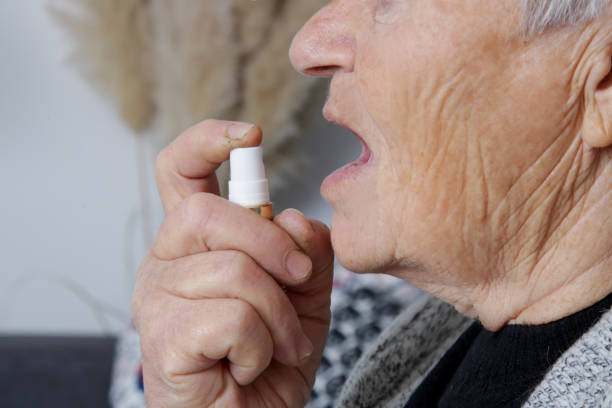
When you place a substance under your tongue, it can be absorbed through the mucous membranes there. They’re thin, and densely supplied with blood vessels.
This route bypasses the digestive system.
Which means the ingredients don’t have to survive stomach acid or first‑pass metabolism in the liver.
This isn’t fringe thinking.
It’s exactly why sublingual nitroglycerin is a standard emergency format for angina. It’s one of the faster, more direct ways to get something into the bloodstream without waiting on digestion.
Conventional medicine uses the sublingual route precisely because it works as a delivery mechanism.
But honestly? For me the biggest advantage was much more mundane than absorption science.
It was compliance.
It was the fact that I would actually keep doing it.
| Capsules & tablets | Sublingual spray | |
|---|---|---|
| Route | Swallowed, digested, metabolized | Absorbed under the tongue |
| Needs water | Usually yes | No |
| Time to take | A trip to the kitchen | About three seconds |
| Portability | Bottle, organizer, or pill case | Fits in a coat pocket or handbag |
| Discreet in public | Not especially | Looks like a breath spray |
| Hard to swallow? | A real problem for many of us | Not an issue |
The directions are simple enough that I’ve never once had to check them twice:
- Two sprays under the tongue, three times per day for adults and children over 12.
- Up to six applications daily when you want extra focus — before a family gathering, an appointment, a long drive.
- No water, no swallowing, no routine to build. The bottle goes in a pocket or a handbag.
- Under 12: consult a healthcare provider. Pregnant or nursing: consult a healthcare professional first.
If you already take several medications or supplements, you know exactly how much friction there is in adding one more pill to the lineup.
This eliminates that friction almost entirely.
And I think that’s underrated.
The best formula in the world does nothing if the bottle sits unopened in a cupboard by week three.
Check Availability on Sprayology.com →One‑month supply · Backed by Sprayology’s written 3‑week guarantee
My ExperienceMy Three‑Times‑a‑Day Routine
I ordered Brain Power directly from Sprayology’s website. It arrived within a few days.
The bottle is small, plain, and honestly looks like a breath spray.
Which I appreciated more than I expected to.
Nobody at a restaurant or a family dinner has ever looked at it twice.
That matters when you’re at the stage of quietly not wanting your children to notice things.
I used it exactly as directed. And I kept it stupidly simple, because I know myself:
- Morning, next to the kettle. Two sprays while the water boils. The bottle lives on the counter where I cannot miss it.
- Midday, in my handbag. Two sprays around lunch, wherever I happen to be.
- Late afternoon, before the wall. Two sprays around three o’clock — deliberately before the fog usually arrived, rather than after.
The taste is mild. Slightly herbal. Faintly warm from the alcohol for about a second.
Not unpleasant. And certainly nothing compared to swallowing a horse‑sized capsule dry because you forgot the water again.
One piece of advice I’d give anyone starting.
Tie it to something you already do without thinking.
The kettle. Brushing your teeth. Sitting down with the paper.
Because if you rely on remembering to take something for your memory, you will fail. You will laugh about it. And then you will stop.
My Honest 60‑Day Journal, Week By Week
I kept notes.
Of course I kept notes. I was an English teacher for thirty‑one years.
Here is what I wrote down, as close to unedited as I’m willing to make public.
Honestly? Not much.
I want to be truthful about this, because I think the first week is where most people quit.
I was still foggy in the mornings. I still lost a word on Thursday talking to the pharmacist. If I’d been expecting fireworks, I’d have been disappointed.
The only thing I noted was feeling slightly more present in conversation. Less like I was listening through a pane of glass.
I genuinely didn’t trust that observation at the time. I assumed I was looking for something because I’d spent money.
This is where things started to shift. And where I stopped dismissing my own notes.
One evening I was reading a novel and realized I’d gone forty pages without my mind drifting off once.
Not once.
That had not happened in well over a year. I actually put the book down and sat there for a moment, because I noticed the absence of something I’d stopped expecting to have.
A few days later I got through an entire hour‑long phone call with my sister without losing the thread. And my sister talks in spirals.
Small things, both of them. But they felt significant in a way I find hard to convey unless you’ve been through it.
The cumulative effect became clear enough that I stopped questioning it.
I wasn’t standing in doorways trying to reconstruct why I’d walked in. I could recall details from conversations I’d had two or three days earlier without straining for them.
I felt mentally quicker.
And by quicker I mean specifically that there was less lag between thinking something and being able to say it. That gap had been widening for years. It narrowed.
My husband, who is not a man given to unsolicited commentary, said: “You seem sharper lately. What’s different?”
I hadn’t told him I was taking anything.
That was the moment I decided to reorder.
The afternoons were the biggest change for me.
That 3 p.m. wall — the one where reading stops working and I’d give up and go do something with my hands instead — softened noticeably.
It didn’t disappear. But it moved later, and it hit lighter.
I also started doing things I’d quietly stopped doing. I offered to drive to my nephew’s place two towns over. I hosted six people for dinner.
Neither of those sounds like much written down. Both of them were things I’d been avoiding for a year and a half.
By the two‑month mark it had simply become part of the furniture of my day. Kettle, spray, coffee, paper.
I notice it most on the rare occasions I forget it. The afternoons feel a bit heavier again.
I switched to the subscription at this point. Partly for the discount — and partly because I know myself, and I did not want to be the woman who runs out on a Sunday and doesn’t reorder for three weeks.
The fog didn’t vanish. It thinned. And after two years of it slowly thickening, thinner was more than enough to change how I moved through a day.
What It Did Not Do
I want this section in here more than any other.
Because it’s the section that would have made me trust an article like this one.
- It did not give me the mind of a 30‑year‑old. My brain is 68 years old. It is going to stay 68 years old. Nothing in a bottle changes that.
- It did not work overnight. Week one was, genuinely, nothing. If you need something to work on day two, you will be disappointed and you should not buy this.
- It did not eliminate bad days. I still have afternoons where I’m scattered, especially if I’ve slept badly. Sleep still runs the whole show.
- It did not replace anything else I was doing. The walking, the earlier reading, the hearing test, the less wine — all of that still matters, and I suspect it matters more than the spray does.
- It is not a treatment for any medical condition. If you have real concerns about your memory, please see a doctor. A wellness spray is not a substitute for an actual evaluation, and anyone who tells you otherwise is not being straight with you.
- It will not work the same way for everyone. My experience is my experience. Yours may be different, including no noticeable difference at all — which is precisely why the three‑week guarantee mattered to me.
What it did do was raise my baseline.
The fog lifted. Not completely. But enough that I felt like myself again.
The version of myself who can hold a conversation. Finish a thought. Drive somewhere new. Trust her own mind in a room full of people.
That is not a small thing.
If you have lived with cognitive sluggishness, you already know that getting back even a portion of your clarity changes the entire texture of a day.
Reader AccountsWhat Other Readers Have Said
I’ve been using several Sprayology products, including Brain Power. After a few weeks I noticed I felt more alert, more present in conversations, and more energized mentally. I don’t feel like I’m dragging through the day anymore. It’s subtle, but it’s real.
As someone who reviews wellness products professionally, I’m always skeptical. But Brain Power genuinely surprised me. I use it on days when I have back‑to‑back deadlines and need my thinking to be sharp. Innovative, fresh and truly unique — it’s become a staple in my routine.
“I bought this for my mother, who’s 79 and was struggling with everyday forgetfulness. She uses it three times a day and says it helps her feel ‘less cloudy.’ She reminds me of things now — which is something she hadn’t done in a long time. I’m ordering a second bottle.”
“I’m a 66‑year‑old retiree who was starting to feel mentally slow. Simple things — remembering appointments, keeping track of conversations, focusing while reading — all felt harder than they should. I started using Brain Power about six weeks ago and the difference is genuine. I feel more engaged. More present. My wife noticed it before I did.”
“What I appreciate most is how easy it is. Two sprays, done. I carry it in my purse everywhere. I’ve tried supplements before — big horse pills I dreaded taking every morning, which is exactly why I stopped taking them. This is effortless, and I’ve genuinely noticed clearer thinking, especially in the afternoons when my brain used to shut down entirely.”
“I was skeptical. I’m an engineer by training — I want evidence, not marketing. After three weeks of using it daily I have to admit I’m retaining information better, I’m more focused during long meetings, and I don’t get that mid‑afternoon brain drain anymore. It’s not dramatic. It’s steady. That’s exactly what makes me trust it.”
“My husband and I both use it now. We’re in our early 70s and we’d both noticed more ‘what was I saying?’ moments. Since starting Brain Power those moments are fewer and farther between. It’s a small daily habit that’s made a real difference in how we both feel mentally.”
About these accounts: the reader comments above are illustrative and are presented as examples of the kind of feedback the product receives. They are not typical results, they are not a promise of what you will experience, and they have not been independently verified by Clarity Mind Journal. Individual results vary. Nothing above should be read as a medical claim.
Read the Full Product Details →You’ll see the complete ingredient list, directions and guarantee on the official page
TrustThe Guarantee, and Why It Mattered to Me
I’ll tell you the truth.
The guarantee is the reason I clicked buy.
Not the ingredient list. Not the founder’s story, as much as I liked it.
The guarantee.
Because a company willing to put a specific timeframe in writing is a company that expects most people not to ask for their money back.
Vague promises cost nothing.
Specific ones cost real money when they’re wrong.
Our guarantee
Sprayology is so confident in our products’ effectiveness that we guarantee them when purchased at Sprayology.com
If after 3 weeks of regular use you do not experience the formula benefits as described on the package, please contact us at 800‑377‑5785 or at info@sprayology.com
Ellie Whalen · Founder, Sprayology
Wellness Boutiques




Three weeks is also, I’d point out, an honest window.
Long enough to give the formula a fair trial — remember that my own first week was uneventful.
Short enough that you’re not committing half a year to find out.
If I’d felt nothing by week three, I’d have picked up the phone.
I didn’t need to.
One clarification worth making, because precision matters.
“FDA Registered” refers to the manufacturing facility being registered with the FDA, which is a requirement for facilities producing these products.
It does not mean the FDA has approved or evaluated the product for effectiveness. No homeopathic product carries that.
I’d rather explain the badge than let you assume something it doesn’t mean.
Who This Is For — And Who It Isn’t
Based on my own experience and everything I read while researching, I’d say Brain Power makes the most sense for:
- Adults over 55 who’ve noticed their thinking simply isn’t as fast or as clear as it used to be.
- People living with mental fog or sluggishness — particularly in the afternoons, or after long stretches of concentration.
- Anyone who feels mentally overworked and wants a natural way to support their cognitive energy through a demanding season.
- People who are done swallowing pills and want something faster and simpler that they’ll actually keep up with.
- Readers — genuinely. If your idea of a good evening is a book and you’ve been losing the thread of the page, this is aimed squarely at you.
- Caregivers, retirees, and still‑working professionals who want to stay sharp and engaged in daily life.
And equally importantly — who should not be ordering this.
Please skip this if: you are looking for a treatment for a diagnosed medical condition; you want something that works within days; you are unwilling to use a product that hasn’t been evaluated by the FDA for effectiveness; or you avoid alcohol entirely (the formula contains 20% v/v organic alcohol).
Please consult a professional first if: you are pregnant or nursing; you are considering it for someone under 12; or you take prescription medications and want to confirm there is no interaction. This is standard, sensible advice and I followed it myself.
Please see a doctor, not a website, if: your memory changes are significant, worsening, or interfering with daily life. Getting lost in familiar places, difficulty managing finances you always handled, or personality changes are reasons to be evaluated properly. Do not let any advertorial — including this one — substitute for that.
The Honest Pros and Cons
- Takes about three seconds to use
- Fast sublingual absorption — no digestion required
- Short, clean, readable ingredient list
- No pills to swallow, no water needed
- Discreet, pocket‑sized bottle
- 25‑year‑old U.S. company, made in the USA
- Written 3‑week satisfaction guarantee
- NDC‑registered product
- Non‑GMO, no artificial colors or fillers
- Subscribe & save 15% with flexible delivery
- Real phone number and email for support
- Homeopathy is a debated field — the NIH notes limited supporting evidence
- Not evaluated by the FDA for effectiveness
- Week one may feel like nothing at all
- Results typically need 2–4 weeks of consistent use
- Contains 20% v/v organic alcohol
- Only available online, not in retail stores
- Requires three doses a day — you have to build the habit
- Individual results vary considerably
Every Question I Had, Answered
These are, more or less verbatim, the questions I worked through before ordering.
Plus the ones readers have written to ask since.
How long before I’d notice anything?
For me, week one was essentially uneventful. Things began shifting in weeks two and three, and the cumulative effect was clear by week four. Sprayology’s own guarantee is built around three weeks of regular use, which lines up with my experience.
If you want a rule of thumb: give it the full three weeks before you form a judgment, and give it consistently. Sporadic use is the most common reason people conclude something “didn’t work.”
What does it taste like?
Mild and slightly herbal, with a brief warmth from the organic alcohol that fades in a second or two. It is not sweetened and it is not unpleasant. My husband described it as “like a very plain breath spray,” which is about right.
Can I take it alongside my prescription medications?
Ask your doctor or pharmacist. I asked mine before starting, and I’d recommend anyone on regular medication do the same. That’s not me being cautious for legal reasons — it’s genuinely what I did, and it took one short phone call.
Is it safe? Are there side effects?
The label instructs you to keep it away from children and not to use it if the transparent seal is broken or missing. Homeopathic preparations at these dilutions are generally regarded as low‑risk, and I personally experienced nothing unpleasant.
That said, no one can promise you a reaction‑free experience with any product, and I’m not going to try. If anything feels off, stop and speak to a professional.
Is 20% alcohol a problem?
The organic alcohol acts as a preservative and carrier, and the actual quantity per dose is very small — two sprays is a tiny volume of liquid. But if you avoid alcohol entirely for medical, religious, or personal reasons, that is a legitimate reason to skip this product, and I’d rather say so plainly than gloss over it.
How long does one bottle last?
The 1.38 fl. oz. (41 ml) bottle is a one‑month supply when used as directed — two sprays, three times a day. If you use the optional extra doses on demanding days, it will run out somewhat sooner.
Can I use more than three times a day?
The directions allow up to six applications daily when extra focus is wanted. I’ve done this before long drives and before hosting. Follow the label and don’t improvise beyond it.
Where is it made, and where does it ship from?
All Sprayology products are manufactured in the United States and ship from Gaithersburg, Maryland. The company has been operating since 2000.
Why can’t I buy it in a store?
Sprayology sells directly through its own website, and the line is also carried in selected spas, resorts, and wellness boutiques across the U.S. Buying from the official site is what activates the written guarantee — the company states it explicitly: the guarantee applies to products purchased at Sprayology.com.
Practically speaking, that’s also the reason I’d avoid third‑party marketplace listings. You have no guarantee of freshness, handling, or authenticity, and no guarantee to fall back on.
What exactly does the 3‑week guarantee cover?
In Sprayology’s own words: if after 3 weeks of regular use you do not experience the formula benefits as described on the package, you contact them at 800‑377‑5785 or info@sprayology.com. Purchase from Sprayology.com for the guarantee to apply. I’d recommend reading the current terms on their site before ordering, as with any purchase.
Is the subscription hard to cancel?
The subscription option offers automatic delivery every 30, 45, or 60 days at a 15% saving, and it’s described as modifiable and cancellable. I chose 45 days, which suits how I actually use it. If you’re uneasy about subscriptions in general, start with a single one‑time bottle — there’s no requirement to subscribe.
I’m skeptical about homeopathy. Should I still try it?
Possibly not, and I mean that sincerely. If you consider homeopathy to be without merit, spending money on it will most likely just annoy you, and I’d rather you keep your money.
My own reasoning is in the honesty section further up this page: I was adding a small, low‑risk, natural element to a routine I was already improving in several other ways, from a company with a long track record and a written guarantee. That calculation made sense to me. It doesn’t have to make sense to you.
Will this help someone with a memory diagnosis?
No, and please don’t buy it for that reason. This is a wellness product, not a treatment for any disease, and it is not intended to diagnose, treat, cure, or prevent anything. If you or someone you love has received a diagnosis, or is showing significant changes, the right next step is a physician — not a spray, and not an article on the internet.
The Three Drinks, the Three Foods, and the One Everyone Argues About
I almost left this part out.
Then I remembered what my friends actually asked me once they noticed the change.
Not one of them asked about the bottle first.
They asked about my kitchen.
“Alright, Rebecca. What are you eating? What are you drinking?”
Fair question. So here is the unglamorous half of the story.
Start with the drinking. Because that one genuinely embarrassed me.
When I finally sat down and counted honestly, I was getting through about three glasses of water a day.
Four on a good one.
And I wasn’t thirsty. That was the whole problem.
My doctor told me something nobody had mentioned to me in sixty‑eight years: as we get older, the thirst signal gets quieter. You can be genuinely low on fluid and simply not feel it.
The first thing to suffer when you’re running low isn’t your legs or your skin.
It’s your concentration. Your word‑finding. Your patience.
All the things I had been quietly blaming on my age.
So I put a glass beside the kettle and made a rule that I fill the glass every time I fill the kettle.
Nothing clever about it. Just visible.
Then the coffee — which I did not give up, and don’t intend to.
What I changed was the clock, not the cup.
Two cups before eleven. Nothing afterwards.
Because I finally saw the loop I had been living inside.
A foggy afternoon led to a late coffee. The late coffee led to a shallow night. And the shallow night produced tomorrow’s fog.
I was treating the symptom at four in the afternoon and paying for it at four in the morning.
And then the wine. This is the one I resisted hardest.
A glass or two most evenings. It relaxed me. It sent me off to sleep beautifully.
What it did not do was let me stay asleep.
I was waking at three, lying there, then dragging myself through the next day wondering why my head felt like wet wool.
I didn’t stop entirely. I’m not going to pretend I did.
I moved it to two evenings a week, earlier, with food.
The difference in how I felt the following morning was the single most obvious change in this entire experiment. More obvious, if I’m honest, than anything else I did.
If you’ve seen the headlines, you already know the three drinks.
They’re everywhere now. “Three popular drinks now tied to memory loss in seniors.” “Avoid this drink like it’s poison.”
I rolled my eyes at them for the best part of a year.
Then I sat down with my doctor and went through them properly, one at a time.
Two of the three described me exactly.
- The evening drink. Wine, in my case. This is the one people mean when they say “treat it like poison,” and I think that word is overblown — I still have a glass. What is not overblown is what it does to the shape of your night. You fall asleep faster and you sleep worse, and a great deal of what you took in during the day gets filed away while you sleep. Two evenings a week, earlier, with food. That was my compromise, and it was the single biggest change described anywhere in this article.
- The sweet drink — including the ones dressed up as healthy. This was my blind spot entirely. It wasn’t fizzy pop; I don’t touch it. It was orange juice with breakfast, a bottled smoothie when I was in a rush, and a sweetened coffee at the garden centre that I’d have cheerfully described as “just a coffee.” All of it arrives as a fast sugar hit, and the dip afterwards felt exactly like the fog I had spent two years blaming on my age. I swapped the juice for the whole fruit and a glass of water.
- The late one. The coffee after lunch. The strong tea at nine o’clock in front of the television. The caffeine was never the villain here — the hour was. It keeps working in you for far longer than it feels like it does, and I was quietly borrowing from tomorrow to get through today.
Three drinks. Not one of them shocking.
All three of them sitting in my kitchen for years, while I lay awake wondering what was wrong with my brain.
Now the plate.
I want to be careful here, because this is where the internet gets silly.
There is no food that restores a memory. Nobody eats a handful of blueberries and finds a name they lost last Tuesday.
What I found instead was something quieter and much more useful.
My worst afternoons had a pattern.
They almost always followed a big, heavy, white‑bread sort of lunch.
Sandwich, crisps, something sweet with the tea. Then, at half past two, the wall.
I’d always assumed the wall was my brain. It turned out a good part of it was my lunch.
So I stopped trying to overhaul my diet — which I’ve failed at roughly four times in my life — and made six small changes instead.
None of that is exotic. None of it is a cure.
What it did was stop me sabotaging myself three times a day without realizing it.
And then there are the three foods.
You’ll have seen those headlines too. “Memory loss isn’t age — just stop eating these three foods.”
I’ll be honest with you: I find the tone of them insulting. Nobody’s memory comes back because they gave up bacon.
But when I stopped being defensive and actually read the list, I couldn’t argue with it.
- Ultra‑processed food. Not “processed” as in a tin of tomatoes or a bag of frozen peas. I mean the things with an ingredients list you’d struggle to read aloud — packet meals, crisps, biscuits, ready‑made sauces, the cereal that claims to be sensible. This is the one researchers have been most vocal about in recent years, and it was quietly making up an embarrassing share of what I ate.
- Processed meat. The ham in the sandwich. The bacon on a Sunday. The sausages. I didn’t eliminate it — I’m sixty‑eight, not a saint — but it went from most days to now and then.
- Refined sugar and white flour. The white bread, the pastry, the four o’clock biscuits. And not for my waistline. Because this was the exact fuel behind the spike‑and‑crash that produced my half‑past‑two wall.
Now notice something about that list.
It isn’t really three foods.
It’s one habit wearing three different coats.
All three do the same thing to you. A fast rise, then a hard fall an hour or two later.
And when you are already frightened about your mind, that fall does not feel like blood sugar.
It feels like getting old.
Which brings me to the banana. Yes, really.
I kept seeing it. A photograph of a bunch of bananas, and a headline telling me to stop eating them immediately.
It irritated me more than the others, because I had eaten a banana most mornings of my adult life and nobody had ever suggested it was anything but sensible.
So I asked my doctor about it directly, half expecting to be laughed at.
I’m glad I did, because the real answer is far more useful than the headline.
The banana is not the problem.
It’s a whole fruit. Potassium, fibre, vitamin B6. It is not on any sensible person’s list of things to be afraid of, and anyone telling you to fear a banana is selling you something.
What matters is how ripe it is, and what you eat it with.
A banana covered in brown speckles has turned much of its starch into sugar. Eaten on its own, on an empty stomach, as your breakfast, with a cup of sweet tea?
That is a fast sugar hit and very little else to slow it down.
Which is precisely what I had been doing. Every single morning. For years.
And then wondering why I fell off a cliff at eleven o’clock.
I didn’t give up bananas. I changed three small things about how I ate them:
- I buy them slightly green and eat them before they go spotty.
- I never eat one on its own. It goes with yoghurt, or a handful of nuts, or a spoonful of peanut butter — the protein and the fat slow the whole thing right down.
- It stopped being breakfast. It is now part of breakfast, or it’s the mid‑afternoon thing I have instead of a biscuit.
My eleven o’clock cliff was gone inside a fortnight.
And I’d like you to take the general lesson from that rather than the banana one.
Most of those “stop eating this immediately” headlines are half a truth wearing a costume.
The food itself is rarely the villain. The portion, the hour, and what you put beside it are usually doing the real work.
One last thing I would never have thought to check: the cupboard above the kettle.
There’s a headline going round about cognitive decline being linked to common medications, and I ignored it for months because it sounded like scaremongering aimed at frightened people.
Then my pharmacist mentioned something called a medication review, and offered to do one for me.
You take everything — the prescriptions, the things you bought off a shelf, the vitamins, the bits at the back of the drawer — put the lot in a bag, and go through it with someone who actually knows what they’re looking at.
It took twenty minutes. It cost nothing.
And I found out that something I had been taking most nights for years — an over‑the‑counter sleep aid I had never once thought of as a drug — was an old‑fashioned antihistamine, and that this whole family of medicines is one pharmacists watch carefully in people my age, precisely because of how it can affect alertness and memory.
Nobody had ever mentioned it to me. And why would they? I bought it off a shelf next to the throat sweets.
Now I want to be extremely careful about what I say next, so I’m going to set it apart.
Please do not stop taking anything because of an article. Not because of the frightening headlines, and not because of mine. Many of the medicines that turn up on those lists are genuinely important, and stopping one suddenly can be far more dangerous than anything it may have been doing to your concentration. Some must never be stopped abruptly at all.
Do the safe version instead. Ask your doctor or your pharmacist for a medication review, and ask one specific question: “Is anything on this list worth revisiting, given that I’m noticing changes in my memory and alertness?” It is a normal request, they will not think you’re being difficult, and it may be the single most valuable twenty minutes described anywhere in this article.
So where does a little white bottle fit into any of this?
This is the part I’d want explained to me, so let me explain it properly.
Everything I’ve just described has a cost. Shopping. Cooking. Planning. Saying no to the second glass.
And look at the shape of that list for a moment.
Almost every single item on it is a subtraction.
Less wine. Less sugar. Less white bread. Less of the ham. No banana on its own. Nothing after eleven.
Less, less, less — of things I had rather been enjoying.
Brain Power was the only thing on my whole list that was an addition instead of a sacrifice.
I don’t think I appreciated how much that mattered until about week five, when I was tired of giving things up and it was the one part of the routine I never once resented.
Some days I do all of it. Some days — a birthday, a long drive, a bad week — I do almost none of it.
Brain Power was the one piece that never got skipped.
Two sprays. Three seconds. No glass of water needed, no food needed, nothing to swallow.
That matters more than it sounds when you’re out of the house, or eating at somebody else’s table, or halfway through a motorway journey.
There’s a practical side to the format too, and it’s the reason I chose a spray over another jar of capsules.
- It goes under the tongue, so it isn’t sitting in my stomach competing with a heavy meal.
- It doesn’t need to be taken with food, or before food, or two hours away from food — which is how I’ve abandoned every supplement I ever bought.
- It doesn’t care whether I’ve had a sensible lunch or a slice of my grandson’s birthday cake.
- It fits in a handbag next to the reading glasses, and nobody at a restaurant has ever looked at it twice.
And there was one effect I honestly didn’t expect.
The bottle lives by the kettle. The glass lives next to the bottle.
Reaching for one made me reach for the other.
The spray turned into the little bell that reminded me to drink the water I had spent two years forgetting to drink.
Make of that what you will. It isn’t pharmacology. It’s just how habits actually work in a real kitchen.
But let me be straight with you, the way I’ve tried to be all the way through.
Brain Power is not food. It doesn’t replace a meal, it doesn’t make up for a bad diet, and it will not undo a bottle of wine.
If you take it and change nothing else about what’s in your glass and on your plate, I don’t think you’ll get what I got.
The water, the earlier dinner, the two‑evenings‑a‑week wine, the walk, the sleep — that’s the foundation.
The spray was the small, consistent thing I could actually keep doing on the days when the foundation wobbled.
Please read this bit properly. Nothing above is dietary or medical advice, and none of it is specific to you. Foods, drinks and supplements interact with medications — blood thinners and blood pressure medicines in particular — and fluid intake is something a number of conditions place real limits on. Before you change your diet, your drinking, or add any product, speak to your doctor or pharmacist about your own situation.
And the same caution as everywhere else in this article. Brain Power is a homeopathic wellness spray, not a treatment. It is not intended to diagnose, treat, cure or prevent any disease, and neither is a plate of sardines. If your memory changes are significant, or getting worse, that is a conversation for a physician — not a kitchen shelf.
What It Costs and How to Order
Brain Power is sold directly through Sprayology’s official website.
Ordering took me about a minute. The bottle arrived within a few days.
Both options are on the official product page. There is no coupon code to hunt for — the subscription discount is applied when you select it at checkout.
Prices and options shown are as listed by Sprayology at the time of writing and may change. Please confirm current pricing, shipping and terms on the official product page before ordering.
Official manufacturer store · 3‑week guarantee applies to purchases made at Sprayology.com
A word on where you buy it. Brain Power is available through Sprayology’s official website, and the guarantee is specifically tied to purchases made there. Third‑party resellers and marketplace listings can’t offer you the same assurance on authenticity, freshness, or support.
If something isn’t right, Sprayology can be reached at 800‑377‑5785 or info@sprayology.com. I have always found it a good sign when a company publishes a phone number that a human answers.
A Letter to the Reader Who Made It This Far
If you’ve read all the way down to here, I already know something about you.
You’re not skimming.
You read properly. The way people used to.
And I suspect you’re here because something in the first few paragraphs sounded uncomfortably familiar.
So let me speak to you directly for a moment. The way I’d speak to a friend across a kitchen table.
The hardest part of what I went through wasn’t the forgetting.
It was the shrinking.
The slow, almost invisible way I began saying no to things. The dinner party. The drive. The phone call. The conversation with more than three people in it.
Each individual no was reasonable.
Together they added up to a smaller life than the one I’d had two years earlier.
And nobody around me had noticed. Because I’d hidden it so well.
Nothing in a bottle fixes that.
I want to be honest with you right to the end, because that’s the only thing that makes anything else I’ve written worth reading.
What changed my life was the whole package.
The walking. The sleep. The hearing aid I should have got years earlier. The reading in the morning instead of at night.
And yes — two sprays under the tongue, three times a day, as one small consistent part of it.
I can’t tell you Brain Power will do for you what it did for me.
Nobody can honestly tell you that about anything.
What I can tell you is this.
It’s inexpensive. It takes three seconds. It comes from a woman who built her company out of her own health crisis twenty‑five years ago.
And it comes with a written three‑week guarantee and a phone number where someone will actually pick up.
If you’ve been quietly worried — and quietly saying no to things — and quietly hoping it’s nothing?
Three weeks is not a large thing to give yourself.
P.S. If you take one thing from this article, let it be the first week. I nearly stopped after seven days because I felt nothing at all, and if I had, I’d have missed everything that came afterwards. The guarantee is written around three weeks for a reason. Give it three weeks, consistently, or don’t start.
P.P.S. Please also do the unglamorous things. Walk in the mornings. Get your hearing checked — genuinely, this one surprised me most. Move your reading to the part of the day when your mind is freshest. And if your memory changes are significant or getting worse, see a doctor and get properly evaluated. No spray, no supplement, and no article — including mine — is a substitute for that.
P.P.P.S. If you order and it does nothing for you, use the guarantee. Call 800‑377‑5785 or write to info@sprayology.com. A company that publishes that number expects to stand behind it, and you shouldn’t feel awkward about holding them to it.
Official Sprayology store · 3‑week guarantee · Made in the USA since 2000
Background reading & sources
- National Institute on Aging (NIH). Memory, Forgetfulness, and Aging: What’s Normal and What’s Not. nia.nih.gov
- National Institute on Aging (NIH). Cognitive Health and Older Adults. nia.nih.gov
- National Center for Complementary and Integrative Health (NIH). Homeopathy: What You Need To Know. nccih.nih.gov
- National Center for Complementary and Integrative Health (NIH). Ginkgo. nccih.nih.gov
- U.S. Food & Drug Administration. Homeopathic Products. fda.gov
- MedlinePlus (U.S. National Library of Medicine). Nitroglycerin Sublingual. medlineplus.gov — cited as an example of the sublingual route in conventional medicine.
- Sprayology. Brain Power product page, About Sprayology, and company guarantee. sprayology.com
- Livingston G, et al. Dementia prevention, intervention, and care: 2024 report of the Lancet standing Commission. The Lancet. 2024;404(10452):572–628. pubmed.ncbi.nlm.nih.gov — on the cluster of modifiable factors associated with cognitive health in later life.
- Lin FR, et al. Hearing intervention versus health education control to reduce cognitive decline in older adults with hearing loss in the USA (ACHIEVE): a multicentre, randomised controlled trial. The Lancet. 2023;402(10404):786–797. pubmed.ncbi.nlm.nih.gov — cited in relation to having one’s hearing checked.
- Rasch B, Born J. About sleep’s role in memory. Physiological Reviews. 2013;93(2):681–766. pubmed.ncbi.nlm.nih.gov — on the consolidation of the day’s material during sleep.
- Ebrahim IO, et al. Alcohol and sleep I: effects on normal sleep. Alcoholism: Clinical and Experimental Research. 2013;37(4):539–549. pubmed.ncbi.nlm.nih.gov — on falling asleep faster while sleeping less well.
- Drake C, et al. Caffeine effects on sleep taken 0, 3, or 6 hours before going to bed. Journal of Clinical Sleep Medicine. 2013;9(11):1195–1200. pubmed.ncbi.nlm.nih.gov — on the timing of caffeine rather than the amount.
- Gomes Gonçalves N, et al. Association Between Consumption of Ultraprocessed Foods and Cognitive Decline. JAMA Neurology. 2023;80(2):142–150. pubmed.ncbi.nlm.nih.gov — an observational cohort study; it reports an association, not a cause.
- Phillips PA, et al. Reduced osmotic thirst in healthy elderly men. American Journal of Physiology. 1991;261(1 Pt 2):R166–R171. pubmed.ncbi.nlm.nih.gov — on the thirst signal becoming less reliable with age.
These sources are provided as general background reading on cognitive aging, homeopathy, and sublingual delivery. They are not studies of Brain Power, they do not evaluate this product, and their inclusion is not an endorsement by any of the organizations listed. Product details, pricing, ingredients and guarantee terms are drawn from Sprayology’s own published materials and were accurate at the time of writing.